
Discover Wadi Rum
Discover Wadi Rum
A Journey into Jordan`s desert Heart
Wadi Rum, located in southern Jordan, is one of the country’s most remarkable natural destinations. Often called the Valley of the Moon, this protected desert area is famous for its vast open spaces, towering sandstone mountains, and peaceful atmosphere. Travelers visiting Jordan frequently describe Wadi Rum as one of the highlights of their journey because it offers a rare chance to experience nature in its purest form.
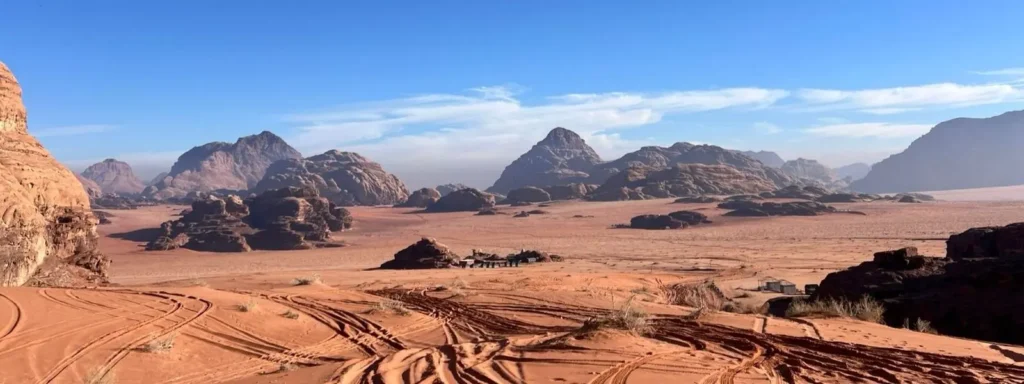
The desert landscape stretches across wide valleys and dramatic rock formations shaped over millions of years by wind and weather. The changing colors of the sand and mountains throughout the day create scenes that feel almost unreal, especially during sunrise and sunset when the entire valley glows in warm shades of red and orange.
Visitors quickly realize that Wadi Rum is not only a beautiful location but also a place where time seems to slow down, allowing travelers to enjoy silence, open horizons, and a break from busy modern life.
A Landscape Shaped by Time
The scenery of Wadi Rum is unlike any other desert in the region. Massive cliffs rise directly from flat desert floors, forming natural arches, narrow canyons, and hidden passages waiting to be explored. Each valley has its own character, and even experienced visitors often discover new views on every trip.
The sand itself varies in color depending on minerals and sunlight. Some areas appear deep red, while others look golden or soft pink, creating striking contrasts against dark mountains and blue skies. Because the landscape is so diverse, jeep tours often travel between dunes, valleys, and mountain viewpoints to show visitors different faces of the desert in a single journey.
At night, the desert becomes even more impressive. Far away from city lights, the sky fills with stars, and the quiet surroundings make evenings in Wadi Rum peaceful and memorable for travelers staying in camps.
Bedouin Heritage and Desert Life
Wadi Rum has long been home to Bedouin communities who have lived in the desert for generations. Their knowledge of the land, weather, and travel routes allowed people to survive in this challenging environment long before modern tourism arrived.
Today, many Bedouin families work in tourism, guiding visitors through the desert and welcoming them into camps. Hospitality is an important tradition, and guests are often greeted with sweet Bedouin tea prepared over an open fire.
Staying in a desert camp allows visitors to experience local customs, traditional cooking, and evening gatherings where stories and music are shared. Meals are often prepared using traditional techniques, creating a warm and friendly atmosphere after a day of exploring.
Learning about Bedouin culture adds depth to a visit, showing that Wadi Rum is not only about landscapes but also about people and traditions connected to the desert.
Experiences and Activities in Wadi Rum
There are many ways to explore Wadi Rum, and visitors can choose activities based on their interests and time available. Jeep tours remain the most popular way to discover the desert, as they allow travelers to reach famous viewpoints, dunes, and historical locations comfortably.
Camel rides offer a slower, more traditional experience, giving visitors a sense of how desert travel once looked before modern vehicles. Hiking routes and climbing areas attract visitors who enjoy exploring mountains and canyons on foot, while some travelers choose longer tours to reach remote areas far from main visitor routes.
Adventure activities such as sandboarding or spending a full night under the stars also attract travelers seeking a deeper connection with the desert environment.
No matter the activity, visitors often say that the sense of space and calm is what makes the experience unforgettable.
in southern Jordan, is one of the country’s most remarkable natural destinations. Often called the Valley of the Moon, this protected desert area is famous for its vast open spaces, towering sandstone mountains, and peaceful atmosphere. Travelers visiting Jordan frequently describe Wadi Rum as one of the highlights of their journey because it offers a rare chance to experience nature in its purest form.
The desert landscape stretches across wide valleys and dramatic rock formations shaped over millions of years by wind and weather. The changing colors of the sand and mountains throughout the day create scenes that feel almost unreal, especially during sunrise and sunset when the entire valley glows in warm shades of red and orange.
Visitors quickly realize that Wadi Rum is not only a beautiful location but also a place where time seems to slow down, allowing travelers to enjoy silence, open horizons, and a break from busy modern life.
Why Travelers Choose Wadi Rum
For many visitors, Wadi Rum becomes one of the most memorable parts of their trip to Jordan. The desert offers more than just sightseeing; it provides a chance to slow down, breathe fresh air, and enjoy wide open spaces rarely found in modern travel destinations.
Watching the sun disappear behind mountains, sharing tea around a campfire, and sleeping under a clear desert sky create experiences that travelers remember long after returning home.
Whether visitors come for adventure, relaxation, or cultural discovery, Wadi Rum leaves a lasting impression. Its natural beauty, welcoming atmosphere, and timeless scenery continue to attract travelers from around the world who wish to discover one of Jordan’s most iconic destinations.
Ancient Human Presence in Wadi Rum
Wadi Rum has been inhabited for thousands of years, long before modern borders and cities existed in the region. Archaeological discoveries show that human communities lived in the area as early as prehistoric times, using the valleys and mountains as shelter and travel routes. Evidence of early settlement can be found in stone tools, ancient campsites, and carvings left by people who crossed the desert searching for water, trade, and safe passage.
The desert environment may look harsh today, but in earlier periods parts of the region were greener, allowing people and animals to move more easily across the landscape. Over time, tribes and travelers continued to pass through Wadi Rum, leaving behind signs of their presence.
These ancient traces show that Wadi Rum was not an empty desert but an important part of human movement across southern Jordan and the Arabian Peninsula for many generations.
Trade Routes and Desert Crossroads
For centuries, Wadi Rum served as a natural corridor connecting Arabia with the Levant and the Mediterranean world. Caravans carrying goods such as spices, incense, textiles, and metals traveled through desert routes linking southern Arabia with cities in Jordan and beyond.
Traders and travelers stopped in areas where water and shelter could be found, making Wadi Rum an important crossing point. The mountains and valleys provided guidance and protection along these long journeys. Over time, different cultures and peoples passed through the region, influencing local traditions and leaving inscriptions and carvings on rocks.
These routes helped connect distant civilizations and supported trade networks that were essential to regional economies. Wadi Rum’s location made it part of a larger story of commerce and cultural exchange across the Middle East.
Bedouin History and Life in the Desert
For many centuries, Bedouin tribes have lived in and around Wadi Rum, adapting to the desert environment through deep knowledge of water sources, seasonal movement, and survival techniques. Their lifestyle depended on herding animals, traveling between grazing areas, and maintaining strong social ties within tribal communities.
Oral history, poetry, and storytelling played an important role in preserving knowledge and traditions across generations. The desert landscape shaped their culture, values, and way of life, creating a strong connection between people and land.
Even as modern life has changed the region, Bedouin history remains closely linked to Wadi Rum. Their presence forms an important chapter in the desert’s story, showing how communities learned to live and thrive in one of the most demanding natural environments.